English Oak
Weitere Informationen zum Beispiel zu Dauerhaftigkeit, Verarbeitbarkeit und Toxizität finden Sie hier.
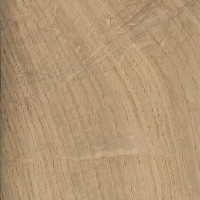
- other common name: European Oak
- scientific name: Quercus robur
- Deutsch: Stileiche
Physikalische Eigenschaften
| Name | Wert | Messverfahren und -bedingungen |
|---|---|---|
| Abmessung (tall) | 24 – 35 m | |
| Abmessung (trunk diameter) | 1 – 1.5 m | |
| Dichte | 675 kg/m³ | |
| radialer Schwund | 4.7 % | |
| relative Dichte | 0.53 | basic |
| 0.67 | 12 % moisture content | |
| T/R-Verhältnis (Schwund) | 1.8 | |
| tangentialer Schwund | 8.4 % | |
| Volumenschwund | 13 % | |
| Mechanische Eigenschaften | ||
| Biege-Elastizitätsmodul | 10.6 GPa | |
| Biegefestigkeit | 97.1 MPa | |
| Druckfestigkeit | 46.3 MPa | |
| Janka-Härte | 4980 N | |
Daten bereitgestellt von
The Wood Database

The information and recommendations contained in this document are based upon data collected by the Wood Database and believed to be correct. However, no warranty of fitness for use or any other guarantees or warranty of any kind, expressed or implied, is made to the information contained herein, and the Wood Database assumes no responsibility for the results of the use of products and processes described herein.
Ergänzende Materialdaten
English oak - thermomechanically densified and thermally modified timber using the Vacu³-process
- the samples were manufactured and conditioned at 20 °C/65% RH prior to the various tests
- density: X-ray measurements (Grecon DAX 6000), specimen 50 by 50 by approx. 20 mm^3 (longitudinal by width by thickness)
- abrasion: Shaker method described by Brischke et al. (2005)*: Specimens of 35 (ax.) by 8.5 by 8.5 mm^3 were placed in polyethylene flasks (V = 500 ml) together with 400 g of steel balls (diameter 6 mm) and moved in an overhead shaker at 28 revolutions min^−1 for 72 h
- brinell hardness: transverse to the grain, ball indenter with a diameter D = 10 mm, Fmax = 1000 N
Physikalische Eigenschaften
| Name | Wert | Sollbereich | Bemerkung | Messverfahren und -bedingungen |
|---|---|---|---|---|
| Dichte | 622 kg/m³ | σ = 89.5 kg/m³ | Untreated, reference | Mean oven-dry density |
| 1202.4 kg/m³ | σ = 133.6 kg/m³ | Only densified, 43% DoD | Mean oven-dry density | |
| 674.9 kg/m³ | σ = 98.6 kg/m³ | Densified, 230 °C/20%, 43% DoD | Mean oven-dry density | |
| 735.8 kg/m³ | σ = 65.3 kg/m³ | Densified, 230 °C/80%, 43% DoD | Mean oven-dry density | |
| 672.9 kg/m³ | σ = 74.7 kg/m³ | Densified, 240 °C/20%, 43% DoD | Mean oven-dry density | |
| Mechanische Eigenschaften | ||||
| Abrieb | 18.2 % | σ = 6.7 % | Untreated, reference | Shaker method |
| 50 % | σ = 23.4 % | Densified, 230 °C/80%, 43% DoD | Shaker method | |
| 49.3 % | σ = 7.3 % | Densified, 230 °C/20%, 43% DoD | Shaker method | |
| 62.6 % | σ = 3.6 % | Densified, 240 °C/80%, 43% DoD | Shaker method | |
| Biege-Elastizitätsmodul | 10065 MPa | σ = 2568 MPa | Untreated, reference | DIN 52186 (1978), three-point bending test |
| 18102 MPa | σ = 1831 MPa | Only densified, 43% DoD | DIN 52186 (1978), three-point bending test | |
| 9996 MPa | σ = 2702 MPa | Densified, 230 °C/80%, 43% DoD | DIN 52186 (1978), three-point bending test | |
| 8246 MPa | σ = 1671 MPa | Densified, 230 °C/20%, 43% DoD | DIN 52186 (1978), three-point bending test | |
| 6919 MPa | σ = 3202 MPa | Densified, 240 °C/80%, 43% DoD | DIN 52186 (1978), three-point bending test | |
| Biegefestigkeit | 110 MPa | σ = 28 MPa | Untreated, reference | DIN 52186 (1978), three-point bending test |
| 219 MPa | σ = 30 MPa | Only densified, 43% DoD | DIN 52186 (1978), three-point bending test | |
| 43 MPa | σ = 18 MPa | Densified, 230 °C/80%, 43% DoD | DIN 52186 (1978), three-point bending test | |
| 34 MPa | σ = 3 MPa | Densified, 230 °C/20%, 43% DoD | DIN 52186 (1978), three-point bending test | |
| 39 MPa | σ = 26 MPa | Densified, 240 °C/80%, 43% DoD | DIN 52186 (1978), three-point bending test | |
| Brinell-Härte | 3.59 kg/mm² | σ = 0.30 kg/mm² | Untreated, reference | EN 1534 (2010) |
| 8.54 kg/mm² | σ = 0.88 kg/mm² | Only densified, 43% DoD | EN 1534 (2010) | |
| 3.37 kg/mm² | σ = 0.46 kg/mm² | Densified, 230 °C/80%, 43% DoD | EN 1534 (2010) | |
| 2.91 kg/mm² | σ = 0.27 kg/mm² | Densified, 230 °C/20%, 43% DoD | EN 1534 (2010) | |
| 3.24 kg/mm² | σ = 0.33 kg/mm² | Densified, 240 °C/80%, 43% DoD | EN 1534 (2010) | |
Beteiligte
Professur für Ingenieurholzbau und baukonstruktives Entwerfen
Ansprechpartner für diese Materialdaten
Jörg Wehsener
Anfrage per E-Mail
Ähnliche Materialien
Wählen Sie die Materialeigenschaften aus, anhand derer ähnliche Materialien identifiziert werden sollen. Durch Hinzufügen weiterer Eigenschaften sowie Anpassen der jeweiligen Abweichung lässt sich die Ergebnisliste beeinflussen. Hier wird eine Auswahl der ähnlichsten Materialien angezeigt. Um die gesamte Liste zu erhalten, drücken Sie auf die Schaltfläche "Vollständige Ergebnisliste anzeigen".